Summary: Custom orthotics can’t guarantee you’ll never hurt yourself while running, but they can address biomechanical imbalances that often lead to overuse injuries. By addressing how your foot moves and distributes pressure, custom orthotics may lower your risk of common running injuries like plantar fasciitis, shin splints, and runner’s knee.
Most people don’t think about their feet until something hurts. A dull ache after increasing your mileage, a sharp twinge in the heel, or stiffness that starts affecting your stamina. But what if you could get ahead of the pain before it starts?
For those who run regularly, whether recreationally or professionally, prevention matters as much as treatment. The repetitive forces that are exerted on your joints, tendons, and muscles mean that small biomechanical issues can turn into symptoms that affect your performance.
Custom orthotics are designed to help address these patterns, potentially reducing your risk of injury before that first twinge ever shows up. That said, custom orthotics aren’t magic. They can’t prevent every injury; accidents like a rolled ankle or a fall can happen to anyone, no matter how supportive their footwear is. What custom orthotics can do is address the underlying mechanical issues that contribute to overuse injuries, which make up a significant share of running-related pain.
Common running injuries
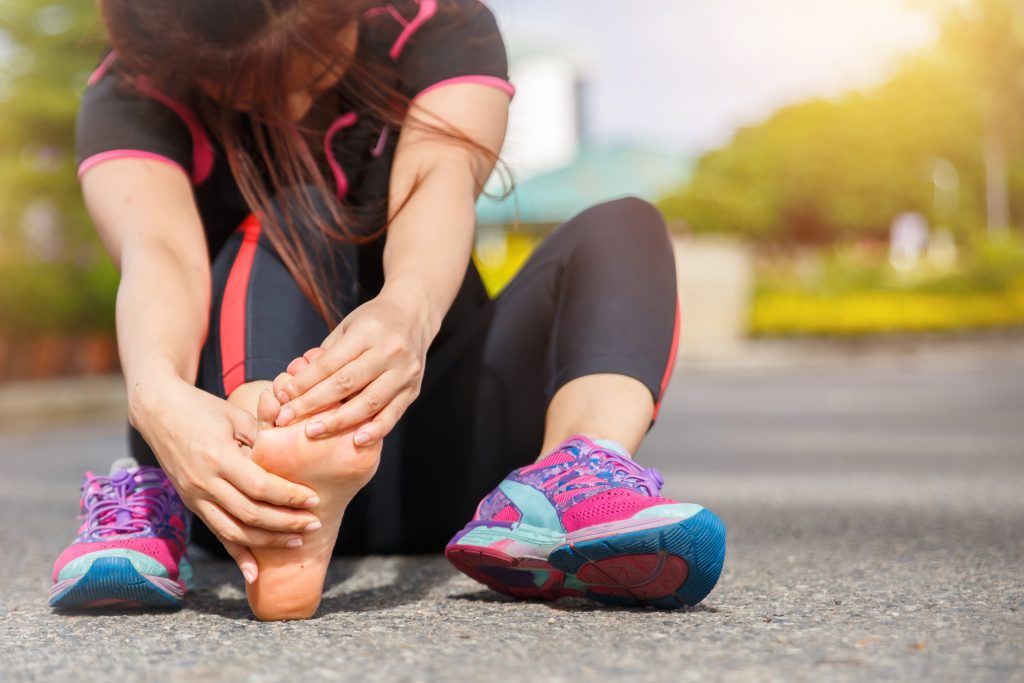
Runners are especially prone to repetitive stress injuries, which develop gradually as the same tissues in the legs and feet absorb your body weight’s impact over and over again. Some of the most frequently reported running injuries include:
- Plantar fasciitis: Inflammation of the tissue connecting the heel to the toes, often causing sharp heel pain
- Shin splints: Pain along the shinbone caused by repeated stress on the muscles and bone tissue
- Runner’s knee: Pain around the kneecap, often linked to alignment or tracking issues
- Achilles tendinitis: Irritation of the tendon connecting the calf muscles to the heel
- IT band syndrome: Pain on the outside of the knee caused by friction from the iliotibial band
- Stress fractures: Small cracks in bone that develop from repeated impact over time
Many runners’ injuries are gradual, which means the warning signs can be easy to dismiss until the pain really affects your performance. And because many of these gradually arising issues can take a long time to heal, preventing them can be a huge time-saver.
What do custom orthotics do for runners?
The greatest benefit of custom orthotics is the name; they are custom made for your needs. Unlike off-the-shelf insoles that might be marketed to runners, Biocorrect’s custom evaluation determines exactly what kind of biomechanical risk factors you’re running with and manufactures a completely unique device just for you.
The importance of getting a custom device rather than one that’s pre-made is easy to demonstrate when you think about how different each person’s lifestyle is. Someone who works on their feet for long shifts typically needs support that prioritizes comfort and stability. A runner, on the other hand, needs an orthotic that can perform through dynamic, repetitive motion for miles. This distinction can affect everything from the materials used to the specific corrections built into the device.
This is why a personal evaluation matters so much. At Biocorrect, a Certified Pedorthist takes the time to understand how you use your feet, whether that’s running trails, training for a marathon, or jogging casually, so the orthotic you receive is built around both your specific gait and activity level.
How custom orthotics reduce injury risk
Custom foot orthotics work by addressing biomechanical imbalances in how your foot is aligned and absorbs impact. When your gait is asymmetrical or your foot doesn’t distribute pressure evenly, certain muscles, tendons, and joints end up absorbing more stress than they’re built to handle. Over time, that imbalance can develop into an overuse injury like the ones mentioned earlier.
By restoring more symmetrical and sustainable biomechanical patterns, custom orthotics help redistribute stress more evenly throughout the lower body. One of the goals of custom orthotics is to position your foot and ankle in optimal alignment.
However, it’s worth noting that getting an evaluation to reduce injury risk is a different goal than treating a specific diagnosis or set of symptoms. If you already have a diagnosed condition, an orthotic would be built to address that particular issue. If you’re focused on injury prevention, your Certified Pedorthist will instead look for risk factors during your evaluation, such as overpronation, leg length differences, or uneven weight distribution, and use that information to guide the type of support and correction that will most benefit you.
Finding the exact right correction may take time as you break in a pair of custom orthotics and maybe even discover an area that needs to be addressed. This is part of why we offer up to 4 adjustments, if necessary, within the first year of using your new custom orthotics. We want you to have the perfect fit and the best experience in the long run.
When is the best time to get evaluated for custom orthotics?
As you might have realized, custom orthotics are not designed for instant results. Your feet and lower limbs often need time to adjust to your orthotics for everyday use, much less high-performance settings like running a race.
This means that professional athletes or runners who have a strict deadline may need to think about the timing of getting fitted and using their new orthotics for the first time. The best timing varies by runner. For example, someone training for a spring marathon might benefit from getting fitted in the fall.
Our team helps professional and recreational runners figure out every aspect of their custom orthotics so everyone can get the most out of their investment.
Running orthotics by Biocorrect
Custom orthotics aren’t a guarantee against every running injury, but they can play a meaningful role in addressing the biomechanical imbalance that often lead to overuse injuries. The right device, built around your specific gait and training demands, may help you run with more efficiency, confidence and less discomfort.
If you’re ready to learn whether custom orthotics could benefit your running routine, request your evaluation today. Our Certified Pedorthists will walk you through a personal evaluation and help you find a solution built specifically for your feet and your goals.